01 / Research

Research & collaboration.

My independent research asks how people evaluate prospective partners, develop romantic connections, and decide which relationships to pursue. I also contribute statistical expertise to collaborative studies of child and adolescent mental health.

Why do some people click?

Why does attraction develop between particular people? My work examines both what people know or believe about a potential partner and what they experience when they interact. I am interested in how traits, perceptions, preferences, and chemistry jointly shape romantic pursuit and, eventually, relationship quality.

01 / Romantic chemistry

Measuring romantic chemistry.
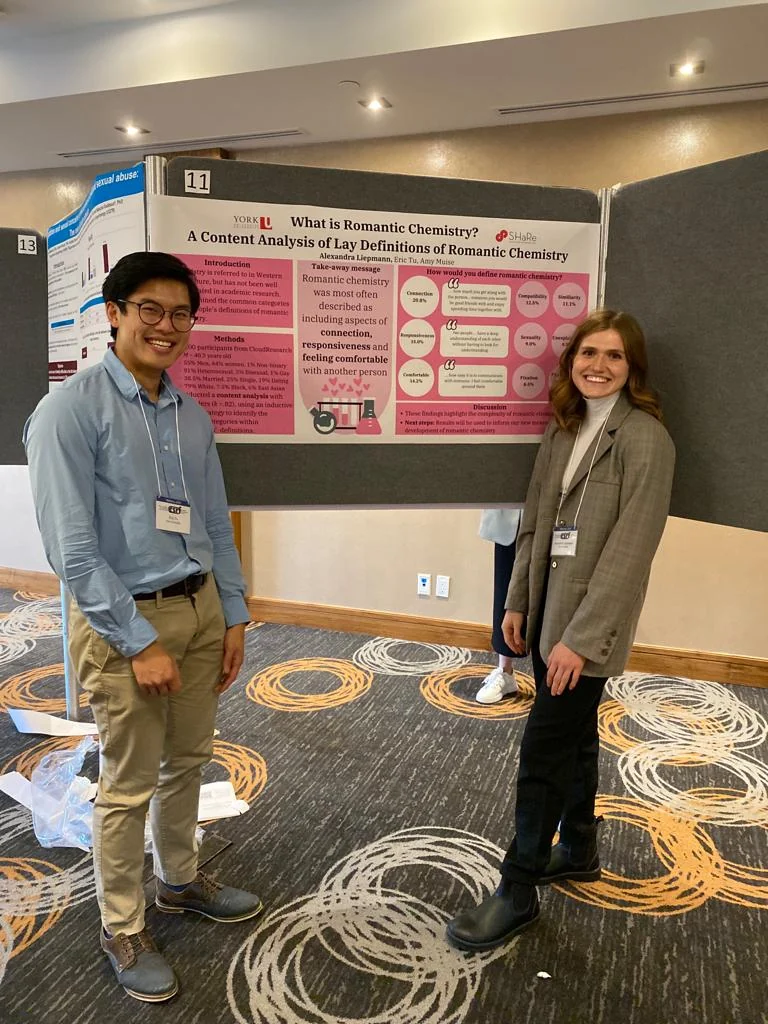
Eric Tu and a colleague beside a poster on lay definitions of romantic chemistry
Discussing how people define romantic chemistry at a research conference.

Across seven dissertation studies, I developed and evaluated the 25-item Romantic Chemistry (RoCh) Scale in single and partnered samples. Its five related components are compatibility, comfortability, unique connection, positive interactions, and sexual attraction. The scale makes it possible to investigate chemistry as a relationship-specific experience.

I began with people’s own descriptions of chemistry and used factor analysis and item response methods to develop the measure. Partners’ ratings were moderately correlated. In a 21-day study of 122 couples, greater chemistry was associated with more positive daily experiences, including responsiveness, gratitude, commitment, and self-expansion. Other analyses link chemistry with relationship commitment and sexual frequency.

These findings are correlational. The scale-development manuscript is available as a preprint and has not yet been peer reviewed.

Read the Romantic Chemistry preprint ↗
02 / Dating & partner evaluation

From first impressions to first dates.

People often know what they want in a partner, yet someone who looks ideal on paper may not inspire much attraction. I study how preferences and perceptions relate to romantic interest, and what people learn when they actually interact.

In a study involving 1,869 speed-date evaluations, I examined the accuracy of attachment-related impressions and their associations with dating interest. My Dynamic Model of Early Romantic Evaluation builds on that work by distinguishing partner-based information, such as traits and perceived preference fit, from relationship-specific experiences, such as chemistry and responsiveness.

I am developing an online-dating diary study and a three-date dyadic study with Dr. Amie Gordon at the University of Michigan, supported by a Mitacs Globalink Research Award. The three-date design includes repeated partner assessments and a planned randomized self-disclosure activity. These projects are in development, not completed findings.

Read the speed-dating article ↗
03 / Established relationships

Personality and relationship experiences.

Which personal qualities help people build satisfying relationships, and do those benefits extend to their partners? My earlier work examined charisma, sexual desire and satisfaction, and conflict in established relationships.

Across five studies of trait charisma, people higher in charisma generally reported more constructive conflict strategies and greater relationship satisfaction. Associations with their partners’ outcomes were smaller and less consistent. This distinction helps motivate my interest in experiences that arise within a particular pairing, rather than only the characteristics each person brings.

Read research on charisma and relationship quality ↗

Child & adolescent
mental health.

At the SickKids Research Institute, I conduct statistical analyses, interpret findings, and write and revise Methods and Results sections for collaborative child and adolescent mental health studies. This work allows me to apply longitudinal and other quantitative approaches to clinically relevant questions. My role is in research, not clinical assessment or treatment.

01 / Mood & cognition

Depression and cognitive functioning

Cross-sectional and longitudinal analyses of adolescent depression and cognition, with attention to how conclusions change across designs.

Related paper ↗
02 / Families & technology

Family functioning and digital life

Research on family relationships, parent–child technology interference, and the possible mental health implications of school cellphone policies.

Related paper ↗
03 / Youth wellbeing

Risk factors and mental health

Collaborative studies of family conflict, inflammatory and cardiovascular indicators, and depression in children and adolescents.

See publications ↗

Sharing the research.

Selected talks and posters from my relationship science, methods, and collaborative mental health research. Posters are available as PDFs; some present preliminary or early-stage work.

Selected talks

Invited talks and oral presentations

2026Invited talk

Catalyst of connection: Investigating the role of romantic chemistry in dating and romantic relationships

Psychology Department Colloquium · Toronto Metropolitan University, Toronto

2026Oral presentation

More than a feeling: Relationship beliefs and romantic chemistry in relationship initiation and maintenance

International Association for Relationship Research · Glasgow, Scotland

2024Oral presentation

“We just click with each other”: Development of the Romantic Chemistry (RoCh) Scale

International Association for Relationship Research · Boston, Massachusetts

Selected posters

Six downloadable conference posters

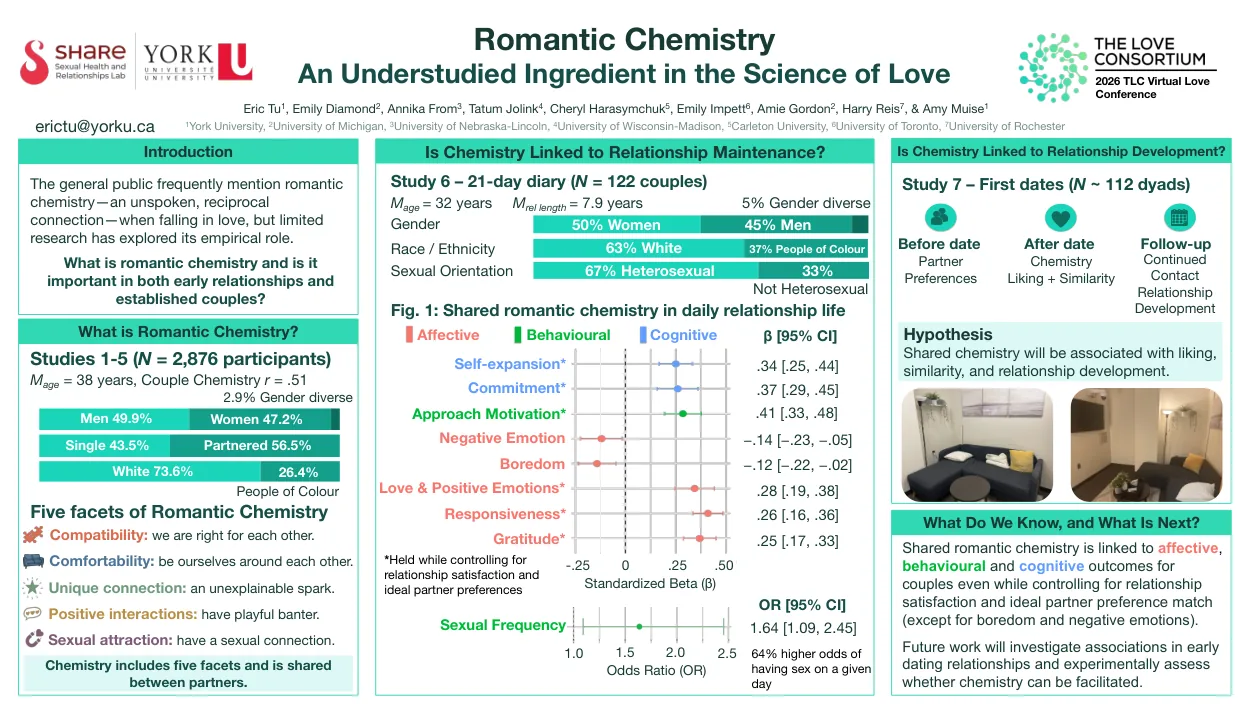
Thumbnail of the 2026 Romantic Chemistry poster summarizing scale development, a couples diary study and planned first-date research
01Relationship science

Romantic Chemistry: An Understudied Ingredient in the Science of Love

The Love Consortium · Virtual Love Conference · 2026

Romantic chemistry in couples and first-date researchView poster (PDF) ↗
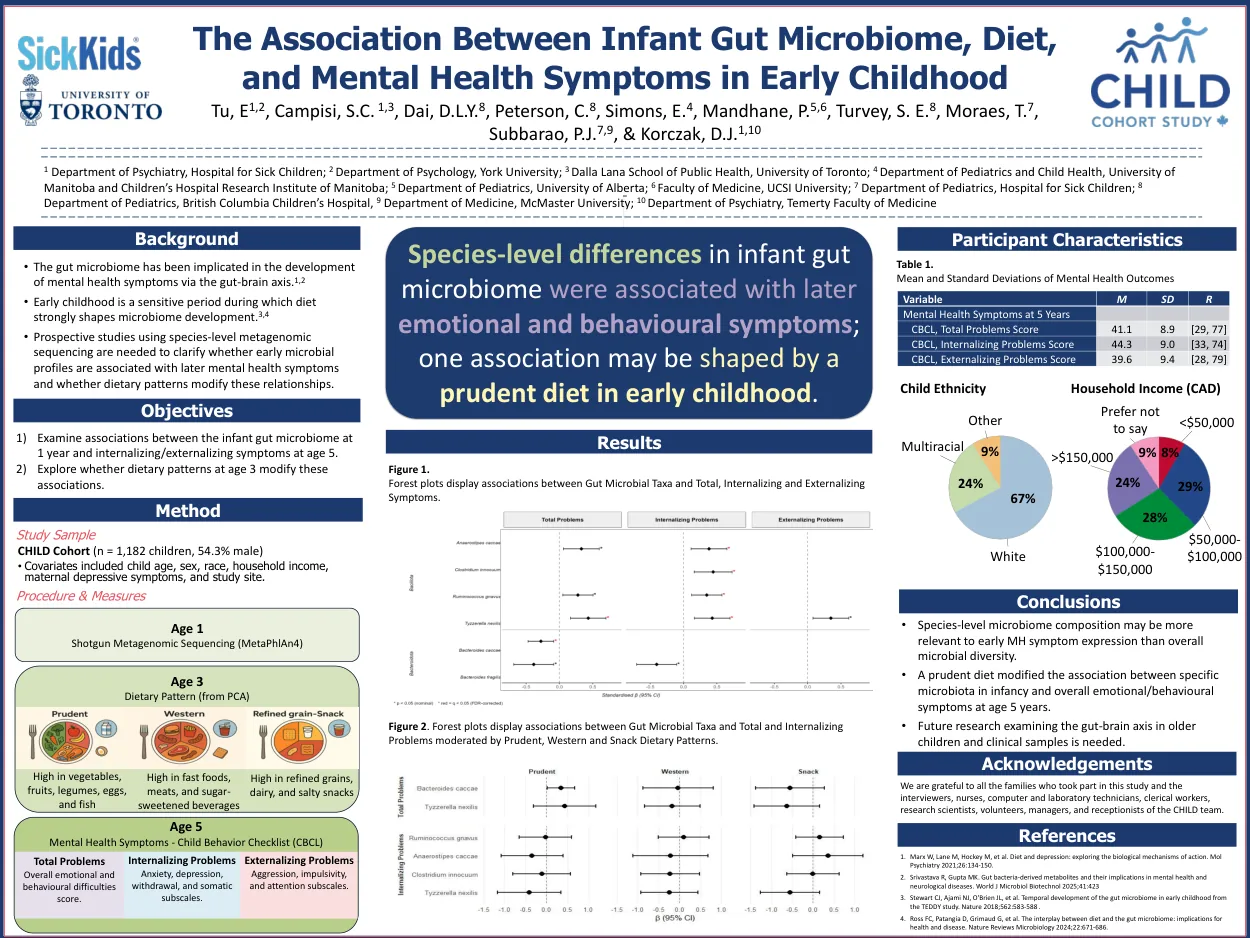
Thumbnail of the 2026 infant gut microbiome, diet and childhood mental health research poster
02Child mental health

The Association Between Infant Gut Microbiome, Diet, and Mental Health Symptoms in Early Childhood

Mulsant-Pollock Research Day · Toronto · 2026

First-author collaborative research at SickKidsView poster (PDF) ↗
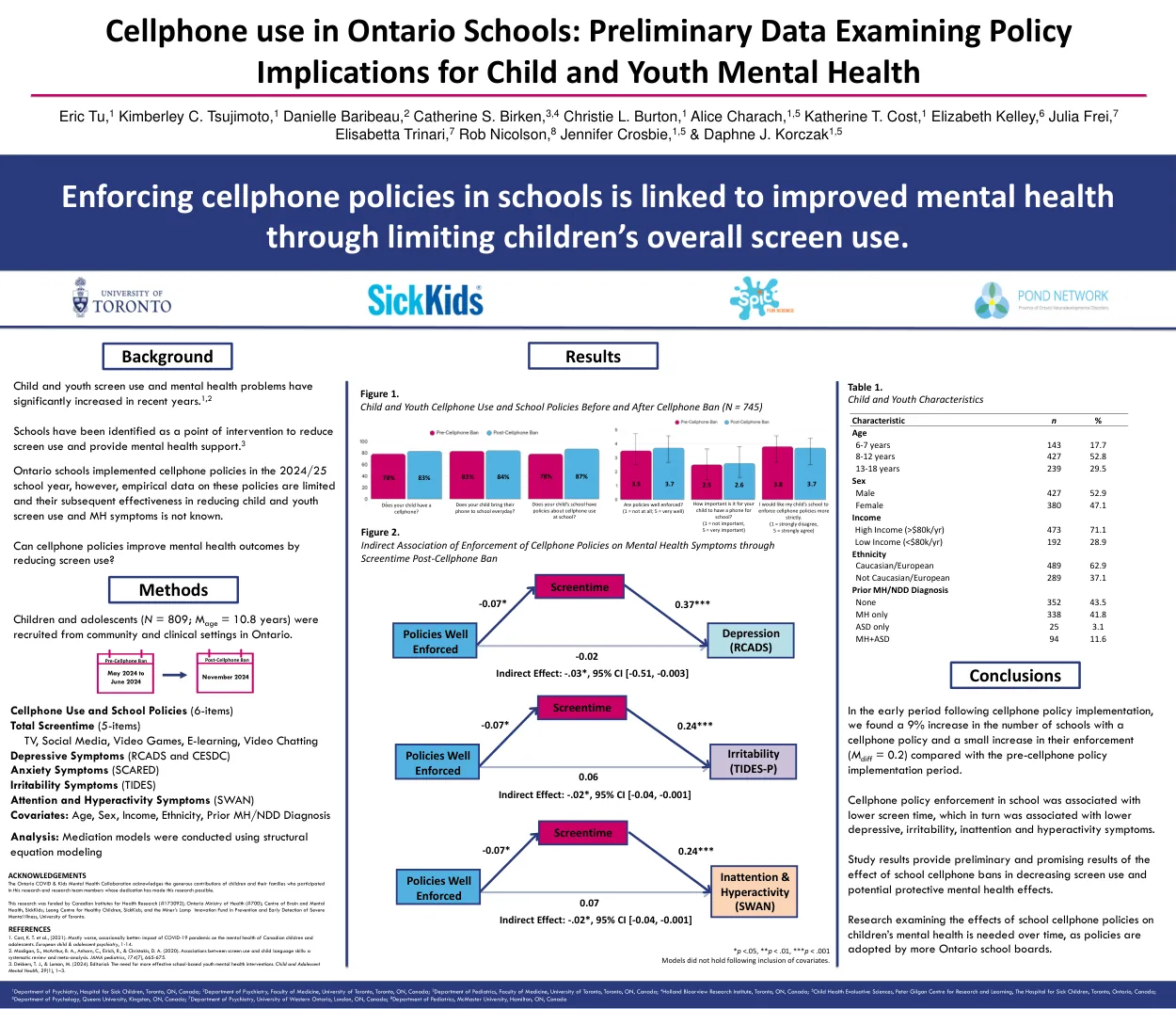
Thumbnail of the Ontario school cellphone policies and youth mental health poster with descriptive charts and mediation diagrams
03Child mental health

Cellphone Use in Ontario Schools: Preliminary Data Examining Policy Implications for Child and Youth Mental Health

Leong Centre for Healthy Children Symposium · 2025

Preliminary conference findingsView poster (PDF) ↗
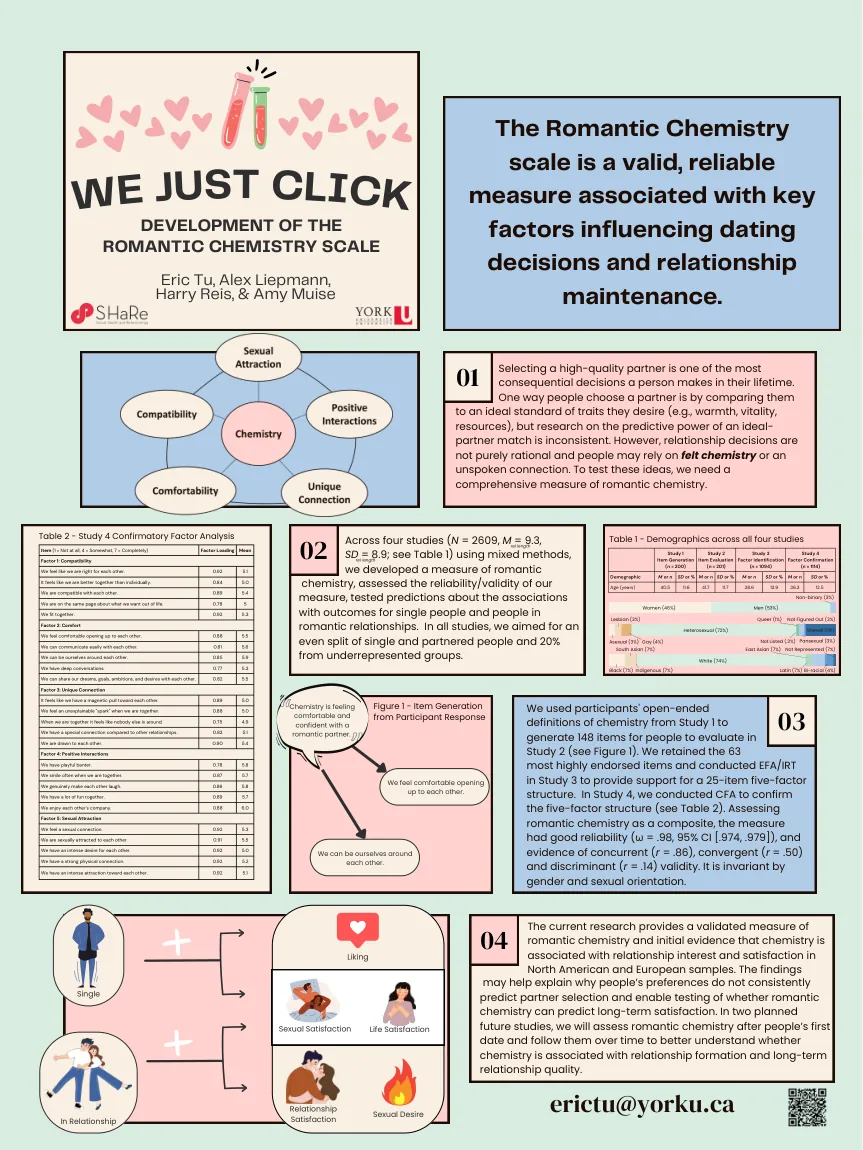
Thumbnail of the We Just Click poster on development of the Romantic Chemistry scale, showing the five dimensions
04Measurement

We Just Click: Development of the Romantic Chemistry Scale

Society for Personality and Social Psychology · 2024

Graduate Student Poster Award finalistView poster (PDF) ↗
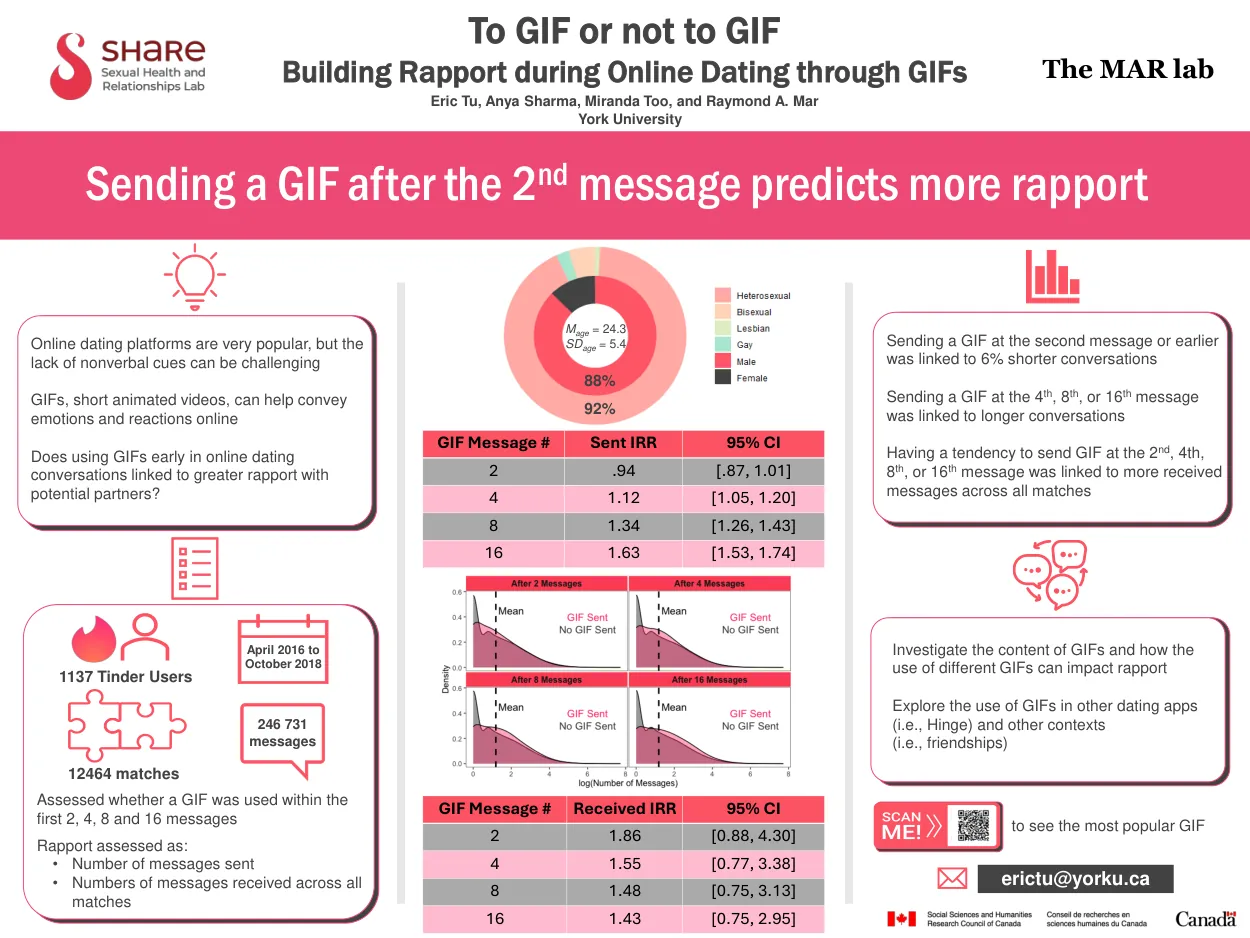
Thumbnail of the pink To GIF or Not to GIF research poster with graphics and estimates from online dating messages
05Online dating

To GIF or Not to GIF: Building Rapport During Online Dating Through GIFs

International Association for Relationship Research · 2024

Analysis of online dating messagesView poster (PDF) ↗
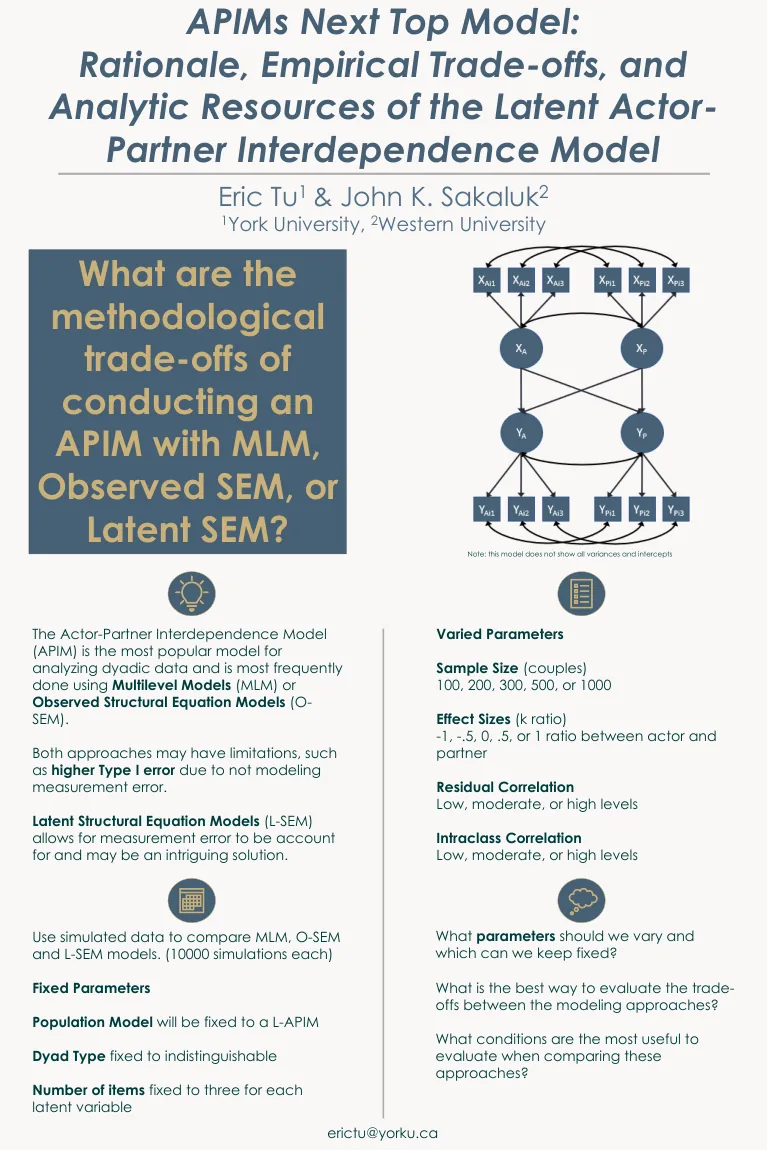
Thumbnail of the APIMs Next Top Model methods poster describing planned comparisons of dyadic analysis methods
06Quantitative methods

APIMs Next Top Model: Rationale, Empirical Trade-offs, and Analytic Resources of the Latent Actor-Partner Interdependence Model

Society for the Improvement of Psychological Science · 2023

Early-stage simulation design, not a completed results reportView poster (PDF) ↗

Methods across projects.

Different research questions often share statistical challenges: measuring complex constructs, accounting for dependence, and interpreting change over time. My methodological work draws on both relationship research and mental health collaborations.

Explore methods & skills ↗